


Henri-Chapelle American Cemetery

Hombourg, Belgium
Official websites use .gov
A .gov website belongs to an official government organization in the United States.
Secure .gov websites use HTTPS
A lock
or https:// means you've safely connected to the .gov website. Share sensitive information only on official, secure websites.
Along the retaining wall of the memorial terrace are inscribed the names of 500 of the missing. Rosettes mark the names of those since recovered and identified.
The gray granite memorial, containing the chapel as well as two large operations maps with narratives and flags of our military services, overlooks the burial area. Stained glass and sculpture embellish the structure. The cemetery is located on the site of the temporary American St. James Cemetery, established on August 4, 1944 by the U.S. Third Army. It marks the point where the American forces made their breakthrough from the hedgerow country of Normandy into the plains of Brittany during the offensive around Avranches, France.
By mid-July 1944, the Allies had secured St. Lô, setting the stage for Operation COBRA, a strategic offensive planned by General Omar Bradley to break out of the Normandy region and drive into Brittany.
The operation, supported by massive aerial bombardments, successfully shattered German lines, enabling rapid advances by U.S. forces. The campaign led to the capture of key towns, a significant German retreat through the Falaise Gap, and ultimately, the liberation of Paris on August 25, 1944. This marked a turning point in the Allied push toward Germany.
The Brest Naval Monument, overlooking the key naval base for U.S. operations during World War I, commemorates the achievements of the U.S. Navy and its role in securing victory.
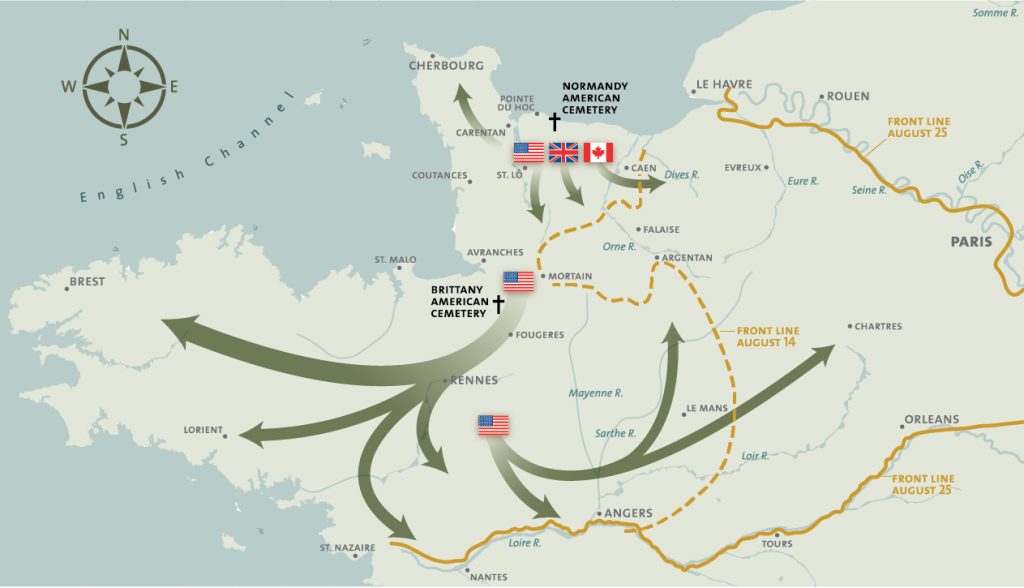
Breakout, Pursuit, and Liberation Brittany Map
With Operation COBRA’s success, the Allies shattered German defenses in Normandy, liberated most of Brittany, and reached the Seine River. The fall of Paris set the stage for the final Allied advance toward Germany.
Vintage posters convey the beauty, tranquility, and solemnity of the place as a sign of respect for those who fought so that we can live free today.
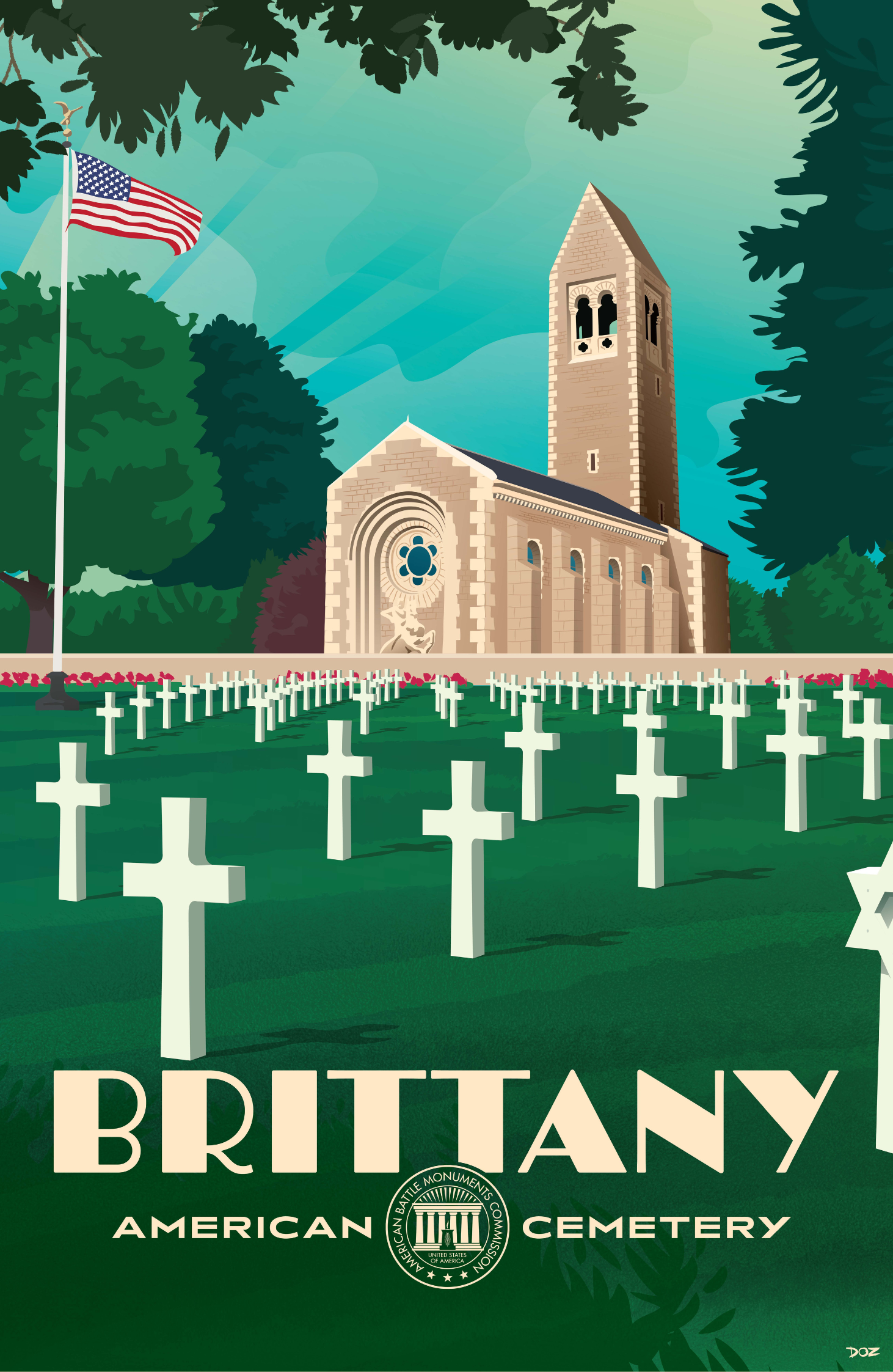
Hombourg, Belgium
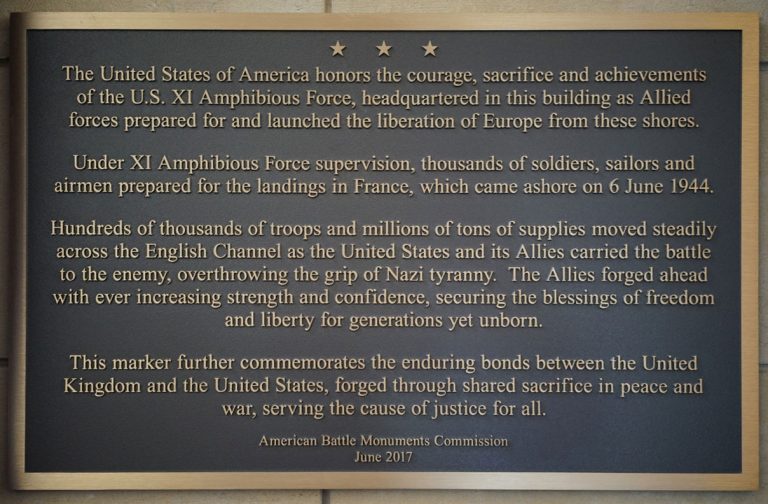
Dartmouth TQ6 0HJ, United Kingdom
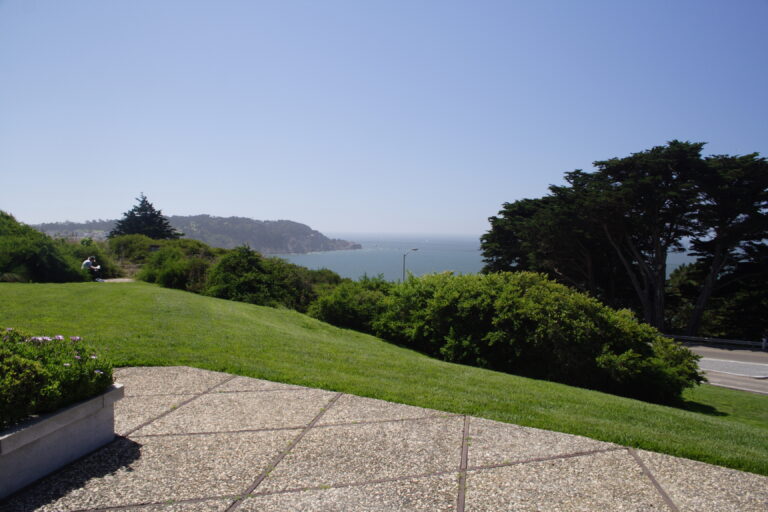
San Francisco, United States

ABMC.gov
official website of the American Battle Monuments Commission and a proud partner of The American Battle Monuments Foundation
Looking for U.S. government information and services? Visit USA.gov
