


Manila American Cemetery

Taguig City, Philippines
Official websites use .gov
A .gov website belongs to an official government organization in the United States.
Secure .gov websites use HTTPS
A lock
or https:// means you've safely connected to the .gov website. Share sensitive information only on official, secure websites.
It lies on a slope with the west and south sides framed by woodland. The cemetery contains the remains of 3,811 of our war dead; 5,127 names are recorded on the Walls of the Missing. Rosettes mark the names of those since recovered and identified. Most died in the Battle of the Atlantic or in the strategic air bombardment of northwest Europe.
From the flagpole platform near the main entrance, the great mall with its reflecting pools stretches eastward. It is from the mall that the wide, sweeping curve of the burial area across the lawn is best appreciated. Along the south side are the Walls of the Missing, and at the far end is the memorial with a chapel, two huge military maps, stained glass windows bearing the state seals and military decorations, and a mosaic ceiling memorial honoring the dead of our air forces.
A new, 4,000-square-foot center visitor center opened in May 2014. Through interpretive exhibits that incorporate personal stories, photographs, films, and interactive displays, visitors will gain a better understanding of this critical campaign that contributed to the Allied victory in Europe during World War II.
A new, 4,000-square-foot center visitor center opened in May 2014. Through interpretive exhibits that incorporate personal stories, photographs, films, and interactive displays, visitors will gain a better understanding of this critical campaign that contributed to the Allied victory in Europe during World War II. Interactive displays in the visitor center include the Battle of the Atlantic and Americans in Great Britain.
The Eighth Air Force, based in Britain, carried out strategic bombing missions that severely weakened German war power. Meanwhile, Allied forces launched campaigns from the UK into North Africa, Sicily, and Italy before preparing for the massive D-Day invasion in 1944.
By the time of the Normandy landings, 1.6 million American troops were stationed in Britain, with 1.2 million joining the battle on the continent within three months. More than 3 million Americans passed through the British Isles during the war, forging lasting bonds between the two nations.
The Cambridge American Cemetery stands as a lasting tribute to the sacrifices made and the enduring partnership between the U.S. and the UK.
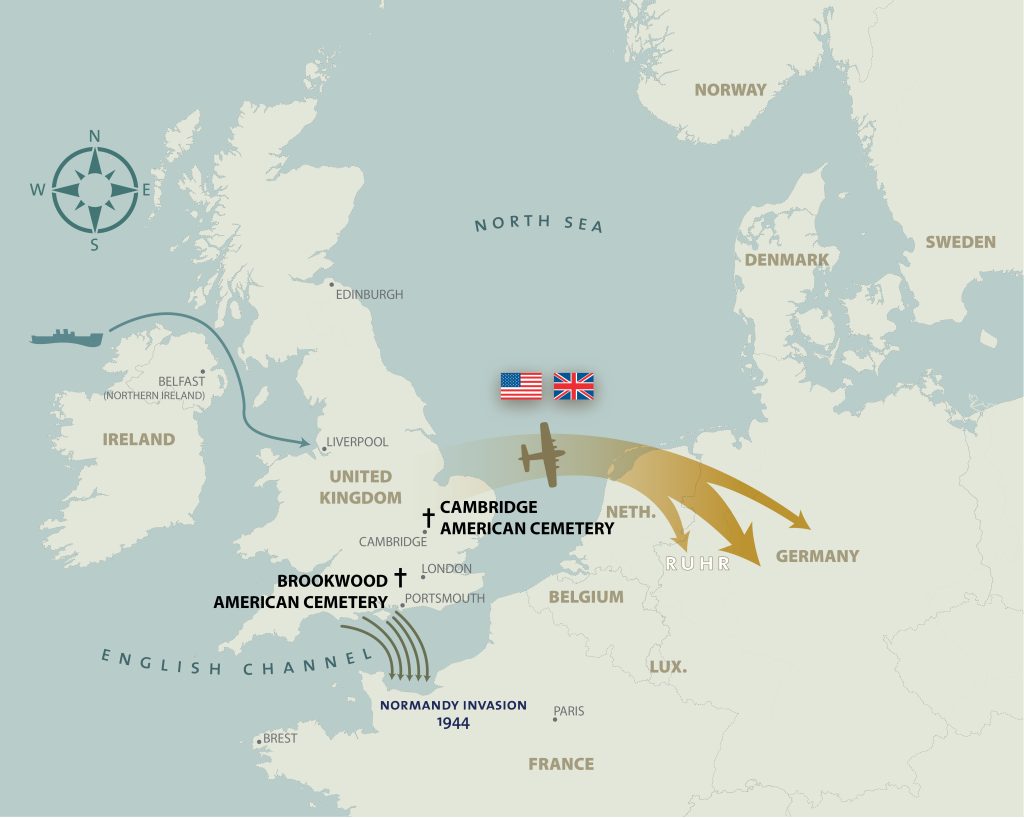
Cambridge History Map
Before December 1941:
December 1941: The U.S. entered World War II, leading to a massive influx of American air, ground, and naval forces into Britain.
August 1942 – May 1945: The Eighth Air Force, based in Britain, launched strategic bombing campaigns against German targets across Europe.
November 1942: 75% of the American troops stationed in Britain were deployed to North Africa as part of the Allied invasion.
1943: U.S. forces took part in campaigns to liberate North Africa, Sicily, and Italy, influencing troop deployments.
Mid-1943: The Allied decision to launch a cross-Channel invasion of Normandy in 1944 led to a renewed buildup of U.S. forces in Britain—nicknamed the “Friendly Invasion.”
June 6, 1944 (D-Day): 1.6 million American troops were stationed in Britain.
Within three months of D-Day: 1.2 million U.S. troops were deployed into battle on the European continent.
1942–1945: Over 3 million Americans passed through the British Isles during World War II, forming strong bonds with their British allies.
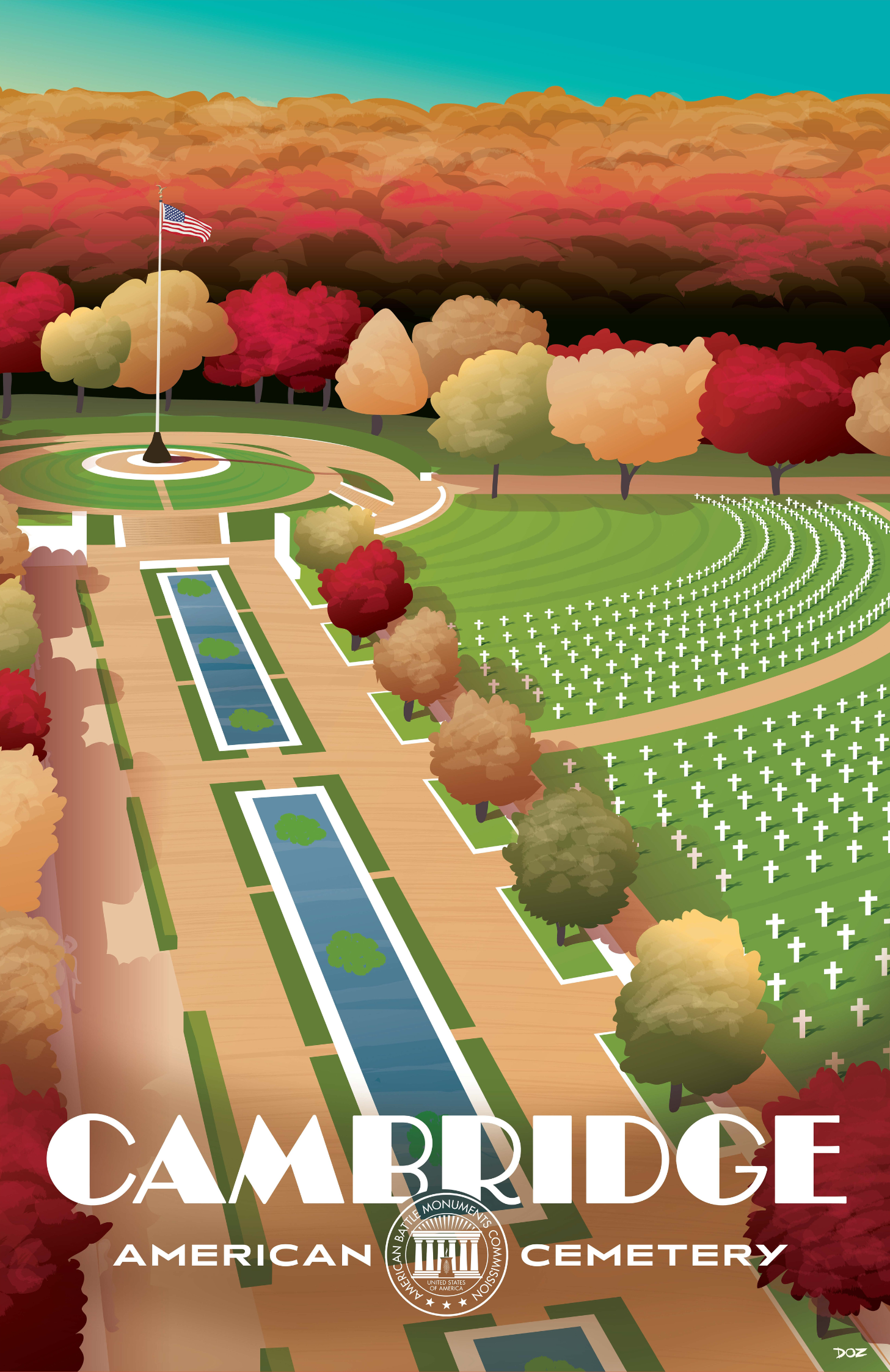
Vintage posters convey the beauty, tranquility, and solemnity of the place as a sign of respect for those who fought so that we can live free today.
Taguig City, Philippines
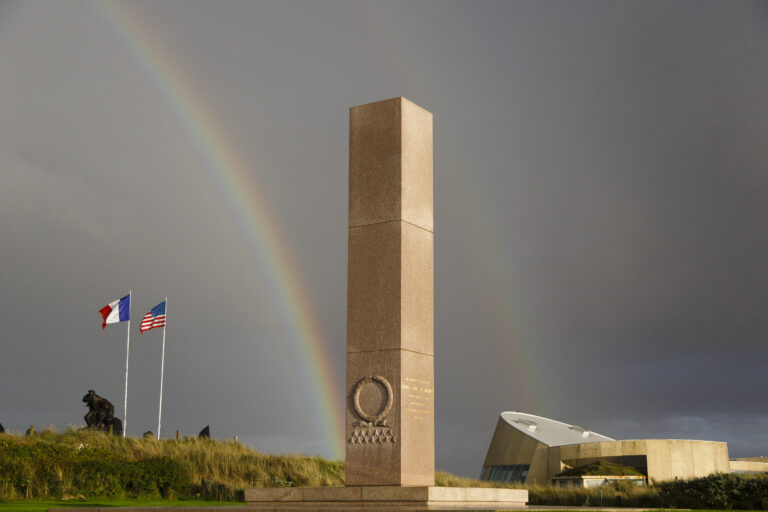
Utah Beach, France

Suresnes, France

ABMC.gov
official website of the American Battle Monuments Commission and a proud partner of The American Battle Monuments Foundation
Looking for U.S. government information and services? Visit USA.gov
