


Cambridge American Cemetery

Cambridge CB23 7PH, United Kingdom
Official websites use .gov
A .gov website belongs to an official government organization in the United States.
Secure .gov websites use HTTPS
A lock
or https:// means you've safely connected to the .gov website. Share sensitive information only on official, secure websites.
Their headstones are arranged in gentle arcs sweeping across a broad green lawn that slopes gently downhill. A highway passes through the cemetery. West of the highway is an overlook that affords an excellent view of the rolling Belgian countryside, once a battlefield.
To the east is the long colonnade that, with the chapel and map room, forms the memorial overlooking the burial area. The chapel is simple, but richly ornamented. In the map room are two maps of military operations, carved in black granite, with inscriptions recalling the achievements of our forces. On the rectangular piers of the colonnade are inscribed the names of 450 missing. Rosettes mark the names of those since recovered and identified. The seals of the states and territories are also carved on these piers.
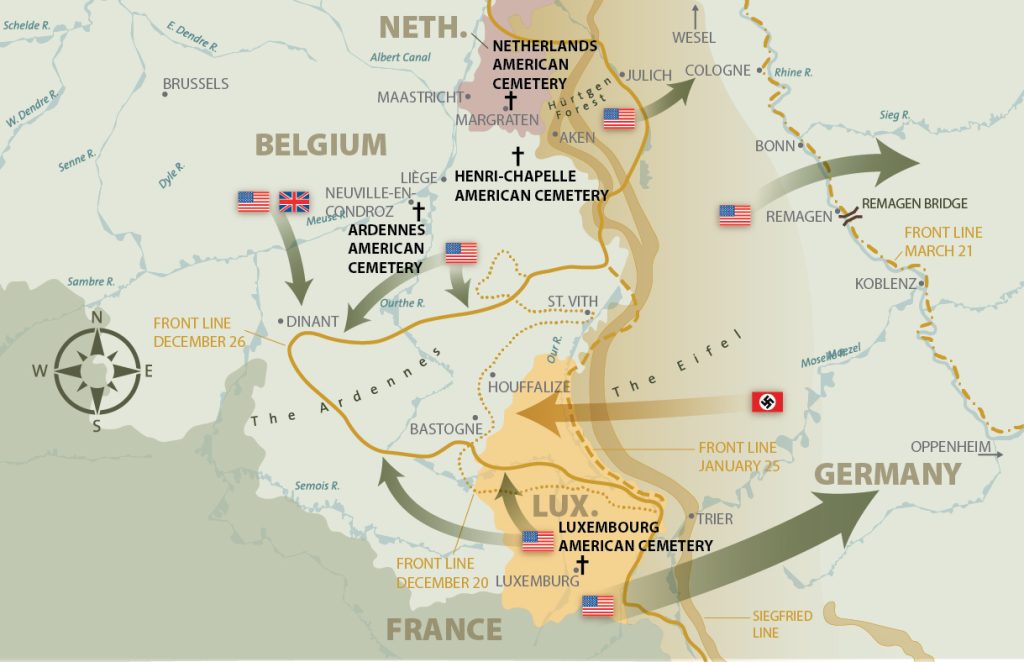
The cemetery possesses great military historic significance as it holds fallen Americans of two major efforts, one covering the U.S. First Army’s drive in September 1944 through northern France, Belgium, Holland and Luxembourg into Germany, and the second covering the Battle of the Bulge. It was from the temporary cemetery at Henri-Chapelle that the first shipments of remains of American war dead were returned to the United States for permanent burial. The repatriation program began on July 27, 1947 at a special ceremony at the cemetery when the disinterment began. The first shipment of 5,600 American war dead from Henri-Chapelle left Antwerp, Belgium the first week of October 1947. An impressive ceremony was held, with over 30,000 Belgian citizens attending, along with representatives of the Belgium government and senior Americans.
Welkenraedt, the nearest train station to the cemetery, may be reached by train from Paris (Gare du Nord), Brussels and Aachen, Germany.
The first was the First U.S. Army’s offensive from September through December 1944, which pushed through northern France, Belgium, Holland, and Luxembourg into Germany. The second was the Battle of the Bulge, the last major German counteroffensive, which temporarily halted the Allied advance but ultimately led to the final push into Germany.
From September 1944 to March 1945, U.S. forces engaged in brutal combat, including the Siege of Aachen, the deadly Hürtgen Forest battles, and the grueling Battle of the Bulge. After overcoming the German counteroffensive in January 1945, the Allies launched Operation GRENADE and Operation LUMBERJACK, clearing the way for the crossing of the Rhine River and the final drive toward victory in Europe.
By March 21, U.S., British, and Canadian forces had reached the Rhine River, setting the stage for the final offensive that would lead to Germany’s surrender on May 8, 1945.
Vintage posters convey the beauty, tranquility, and solemnity of the place as a sign of respect for those who fought so that we can live free today.
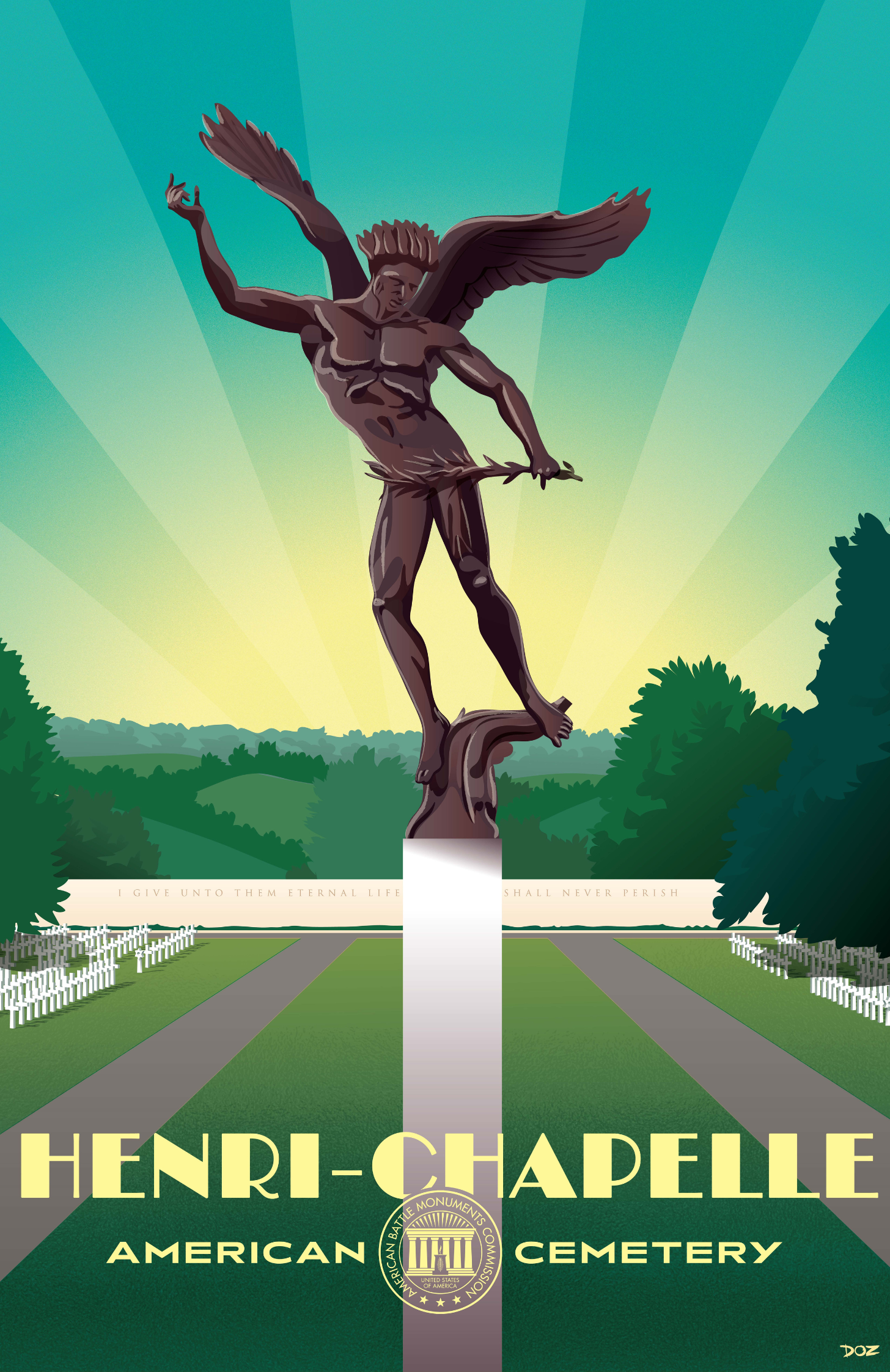
Cambridge CB23 7PH, United Kingdom
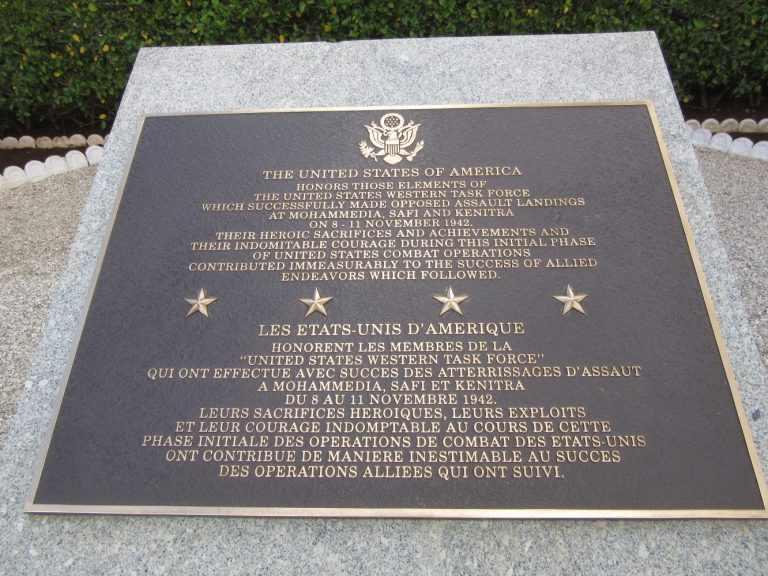
Casablanca, Morocco

Nettuno, Italy

ABMC.gov
official website of the American Battle Monuments Commission and a proud partner of The American Battle Monuments Foundation
Looking for U.S. government information and services? Visit USA.gov
