


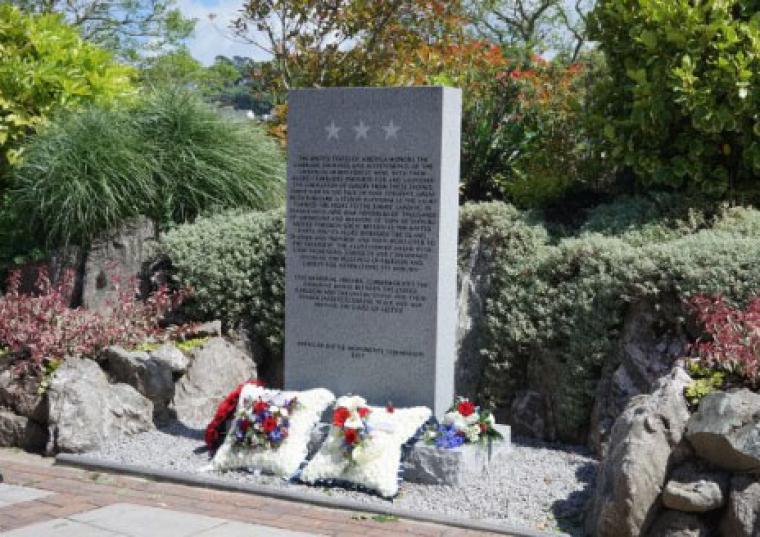
Dartmouth Monument

Dartmouth, United Kingdom
Official websites use .gov
A .gov website belongs to an official government organization in the United States.
Secure .gov websites use HTTPS
A lock
or https:// means you've safely connected to the .gov website. Share sensitive information only on official, secure websites.
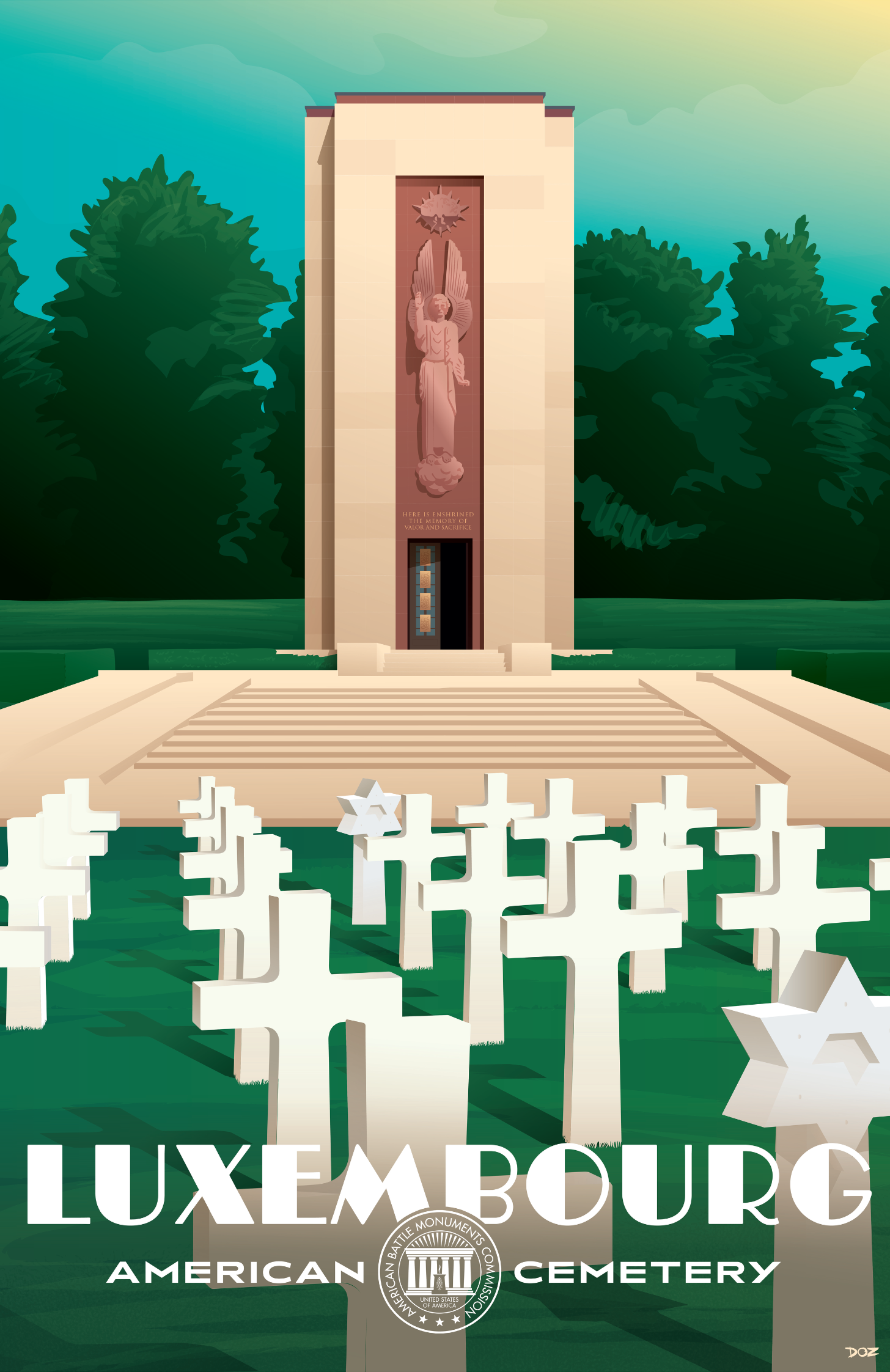
The visitor center, where information and brochures are attainable, is to the left as the visitor enters the front gates. Entering through the gates, the visitor will see the impressive Memorial Chapel encompassed by a stone terrace directly in front of them. The chapel includes massive bronze doors embellished with bronze cartouches depicting military “virtues”, a sparkling mosaic ceiling and a colorful stained-glass windows showcasing the Army insignia representing the men and woman that rest in the cemetery.
On the lower level of the terrace, two pylons face each other across a quote by Eisenhower about the sacrifice of military service members. The pylons display the battle movements in the western European Operations (on the right) and those related to the Battle of the Bulge (on the left). On the reverse of the maps, 371 names of those missing in action are inscribed. Twenty-three bronze rosettes identify service members who have been recovered since the inscriptions were made and now rest in known graves.
Sloping away from the terrace is the cemetery where 5,070 service members lie, many of whom lost their lives in the Battle of the Bulge and in the advance to the Rhine River. The design is a softly curving fan shape consisting of nine sections interspersed with four fountains, majestic trees, and expansive rose and rhododendron beds. It is a befittingly tranquil final resting place for these Americans who gave their all.
The cemetery was established on December 29, 1944 by the 609th Quartermaster Company of the U.S. Third Army while Allied Forces were stemming the enemy’s desperate Ardennes Offensive, one of the critical battles of World War II. The city of Luxembourg served as headquarters for General George S. Patton’s U.S. Third Army. The cemetery is the final resting place of General Patton.
Luxembourg American Cemetery is located near the town of Hamm, three miles east of Luxembourg City center.
This attack, known as the Battle of the Bulge, pierced American lines along a 45-mile front in the Ardennes Forest, catching U.S. forces off guard. However, determined American resistance slowed the German advance, buying time for reinforcements to arrive.
The siege of Bastogne became one of the battle’s defining moments. Despite being surrounded, Brig. Gen. Anthony McAuliffe rejected German demands for surrender with his famous one-word reply: “Nuts!” The Third U.S. Army, under General George S. Patton, quickly maneuvered northward to relieve the town.
By January 25, 1945, the Allied counteroffensive had erased the “Bulge.” In the following months, First and Third U.S. Armies pushed into Germany, breaching the Siegfried Line, capturing key cities, and preparing for the final assault across the Rhine River. The war in Europe was nearing its end.
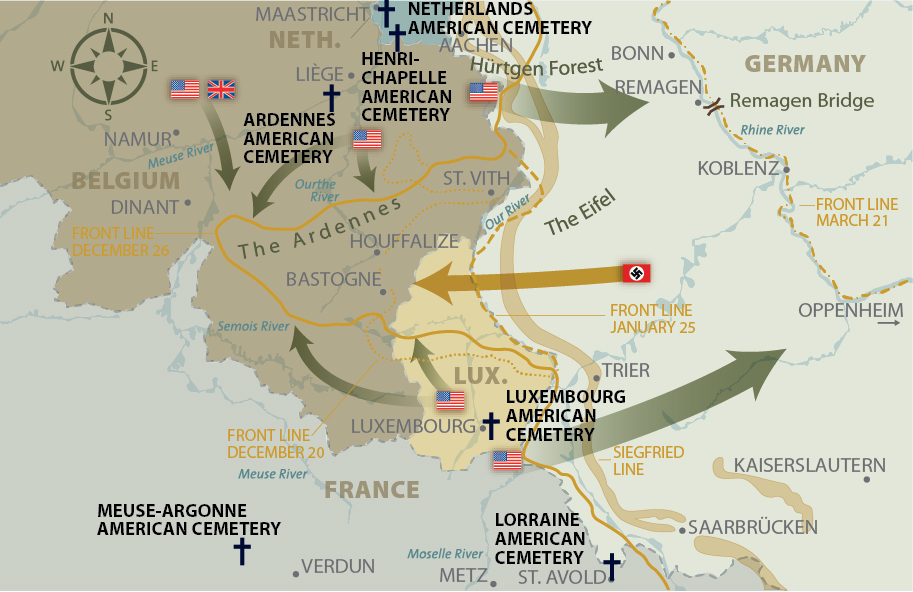
Counteroffensive, Counterattack,and Final Offensive
Vintage posters convey the beauty, tranquility, and solemnity of the place as a sign of respect for those who fought so that we can live free today.
Dartmouth, United Kingdom
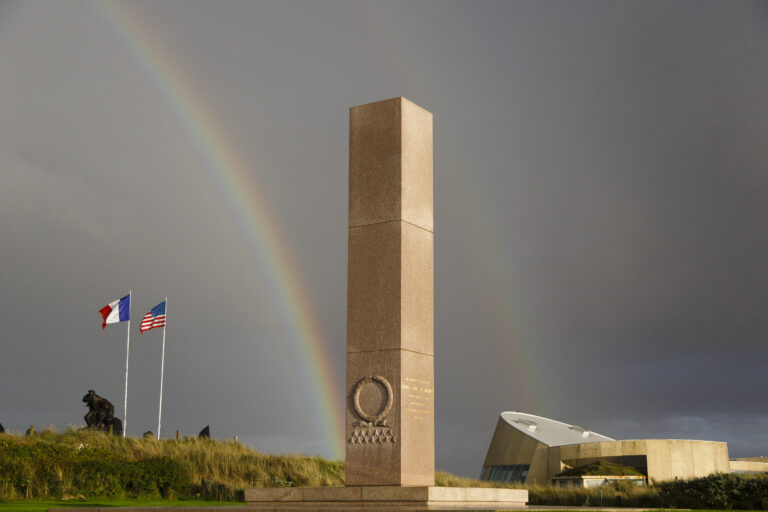
Utah Beach, France

Dinozé, France

ABMC.gov
official website of the American Battle Monuments Commission and a proud partner of The American Battle Monuments Foundation
Looking for U.S. government information and services? Visit USA.gov
