


Suresnes American Cemetery

Suresnes, France
Official websites use .gov
A .gov website belongs to an official government organization in the United States.
Secure .gov websites use HTTPS
A lock
or https:// means you've safely connected to the .gov website. Share sensitive information only on official, secure websites.
On 12.5 acres at the foot of a hill clad with the characteristic cypresses, olive trees, and oleanders of southern France, rest 851 of our military dead, most of whom lost their lives in the liberation of southern France in August 1944. Their headstones are arranged in straight lines, divided into four plots, and grouped about an oval pool. At each end of the cemetery is a small garden. On the hillside overlooking the cemetery is the chapel with its wealth of decorative mosaic and large sculptured figures. Between the chapel and the burial area, a bronze relief map recalls military operations in the region. On the retaining wall of the terrace, 294 names of the missing are inscribed. Rosettes mark the names of those since recovered and identified.
Rhone American Cemetery is in the city of Draguignan, France, located 40 miles west of Cannes and 16 miles inland from Frejus.
The U.S. Seventh Army (VI Corps), supported by the U.S. Twelfth and Fifteenth Air Forces and British and French air units, executed a massive amphibious and airborne assault on the Riviera beaches. More than 800 Allied ships participated, while paratroopers and glider units landed inland to disrupt German defenses.
After quickly securing the landing zones, French and American forces launched a rapid advance up the Rhône Valley, engaging in fierce battles to block the German retreat. Within a month, Allied forces had advanced 400 miles into France, linking up with the Third Army from Normandy on September 11, 1944. This rapid success accelerated the liberation of France and set the stage for the final push into Germany.
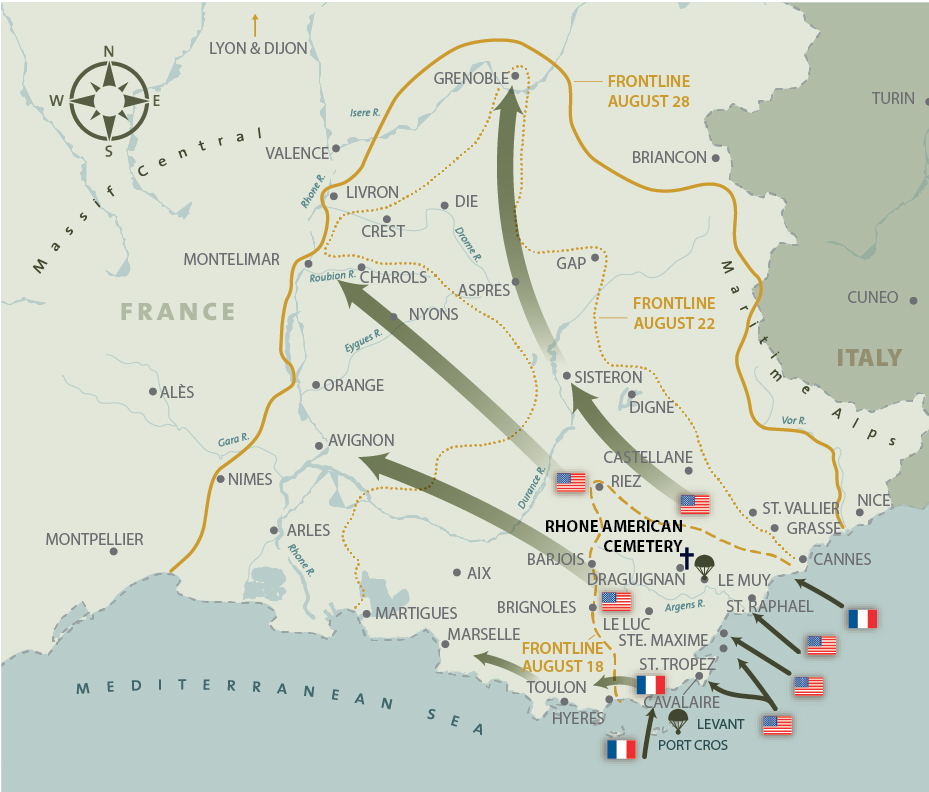
August 15, 1944:
August 16, 1944:
August 19-28, 1944:
August 26, 1944: French II Corps liberated Toulon after intense fighting.
August 28, 1944: French II Corps liberated Marseille, securing a vital Mediterranean port for the Allies.
September 11, 1944: Elements of French II Corps met up with a patrol from the Third Army advancing from Normandy near Dijon, fulfilling the campaign’s objective of linking the northern and southern Allied forces.
Vintage posters convey the beauty, tranquility, and solemnity of the place as a sign of respect for those who fought so that we can live free today.
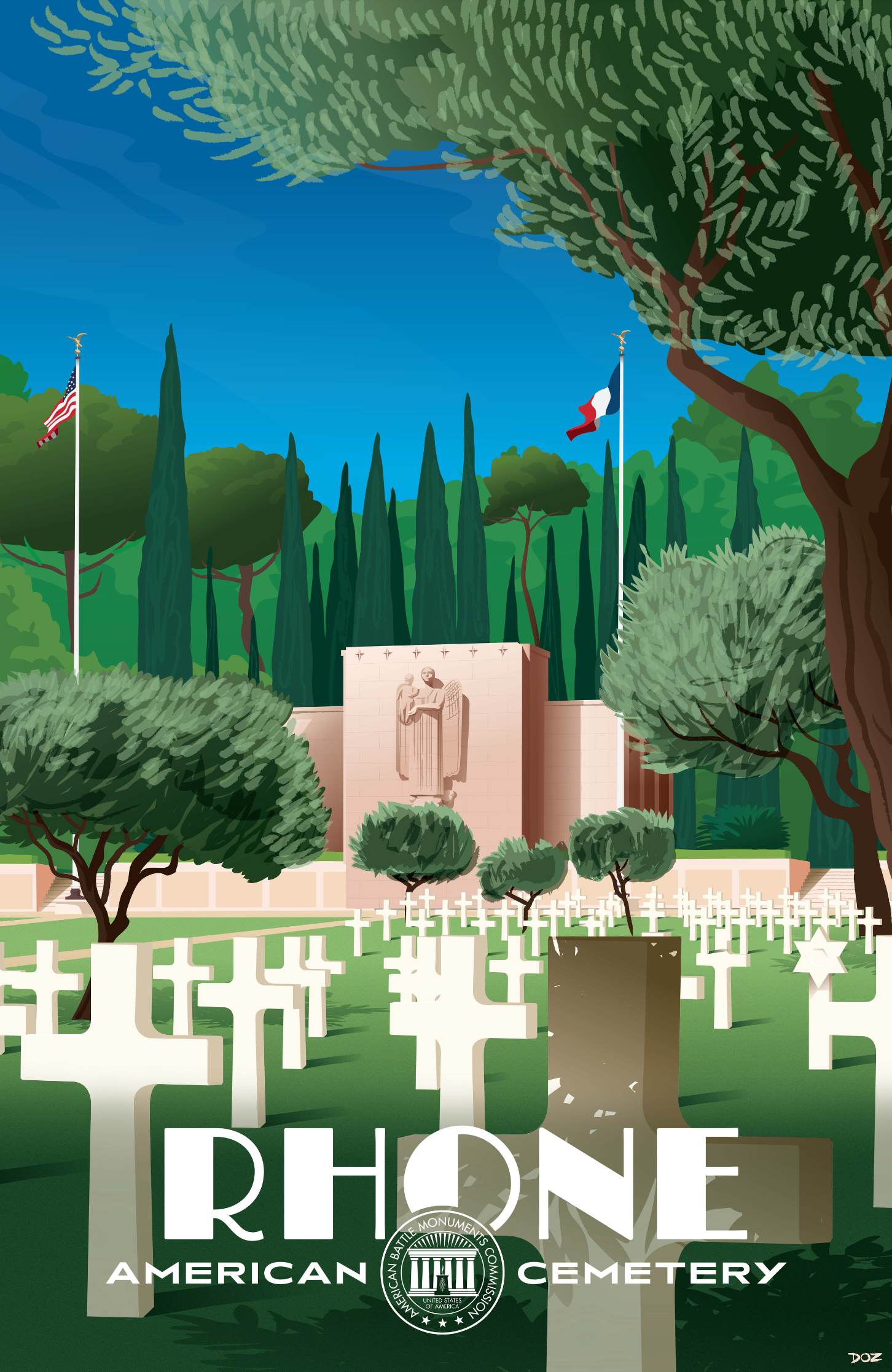
Suresnes, France
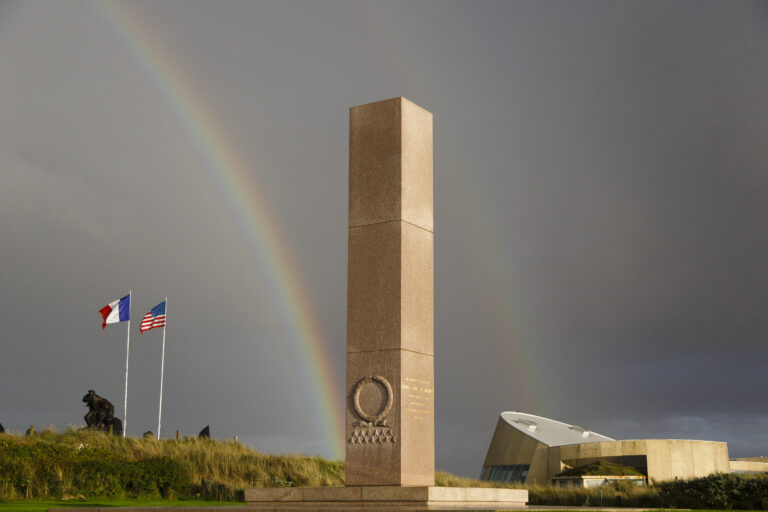
Utah Beach, France

FI, Italy

ABMC.gov
official website of the American Battle Monuments Commission and a proud partner of The American Battle Monuments Foundation
Looking for U.S. government information and services? Visit USA.gov
