


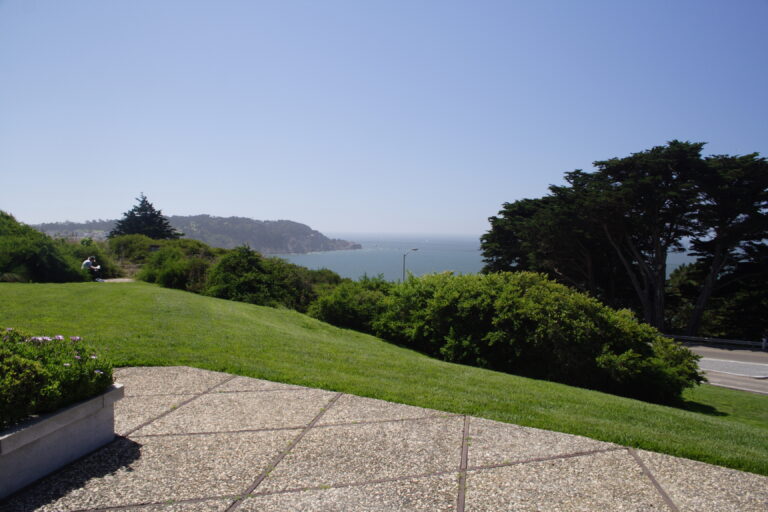
West Coast Memorial

San Francisco, United States
Official websites use .gov
A .gov website belongs to an official government organization in the United States.
Secure .gov websites use HTTPS
A lock
or https:// means you've safely connected to the .gov website. Share sensitive information only on official, secure websites.
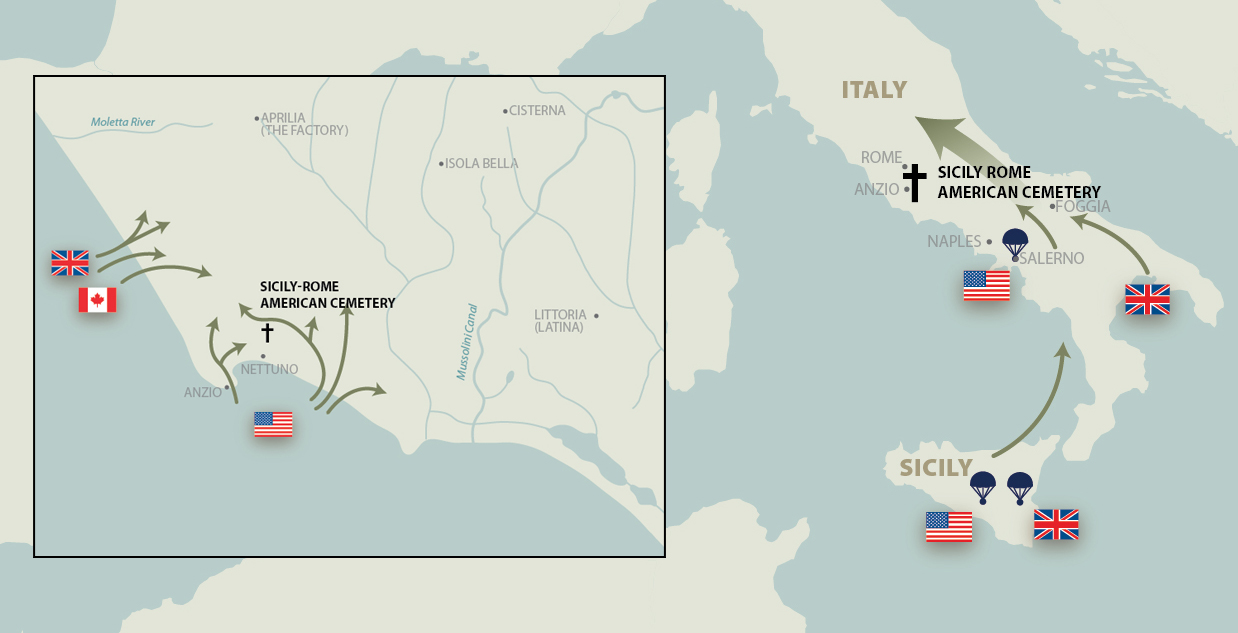
Beyond the pool is the immense field of headstones of 7,845 of American military war dead, arranged in gentle arcs on broad green lawns beneath rows of Roman pines. The majority of these individuals died in the liberation of Sicily (July 10 to August 17, 1943); in the landings in the Salerno Area (September 9, 1943) and the heavy fighting northward; in the landings at Anzio Beach and expansion of the beachhead (January 22, 1944 to May 1944); and in air and naval support in the regions.
A wide central mall leads to the memorial, rich in works of art and architecture, expressing America’s remembrance of the dead. It consists of a chapel to the south, a peristyle, and a map room to the north. On the white marble walls of the chapel are engraved the names of 3,095 of the missing. Rosettes mark the names of those since recovered and identified. The map room contains a bronze relief map and four fresco maps depicting the military operations in Sicily and Italy. At each end of the memorial are ornamental Italian gardens.
A new, 2,500-square-foot center visitor center opened in May 2014. Through interpretive exhibits that incorporate personal stories, photographs, films, and interactive displays, visitors will gain a better understanding of this critical campaign that contributed to the Allied victory in Europe during World War II.
Sicily-Rome American Cemetery lies at the north edge of the town of Nettuno, Italy, which is immediately east of Anzio, and 38 miles south of Rome.
This move aimed to:
After the successful Sicilian Campaign (July – August 1943), the Allies invaded mainland Italy in September 1943. Although Italy surrendered, German forces quickly seized control and fiercely resisted the Allied advance.
Fighting in Italy was slow and grueling, as the Germans used the mountainous terrain to their advantage. Progress stalled at the Gustav Line, prompting an amphibious landing at Anzio in January 1944 to bypass German defenses. After months of deadlock, the Allies finally broke through in May 1944 and liberated Rome on June 4, 1944.
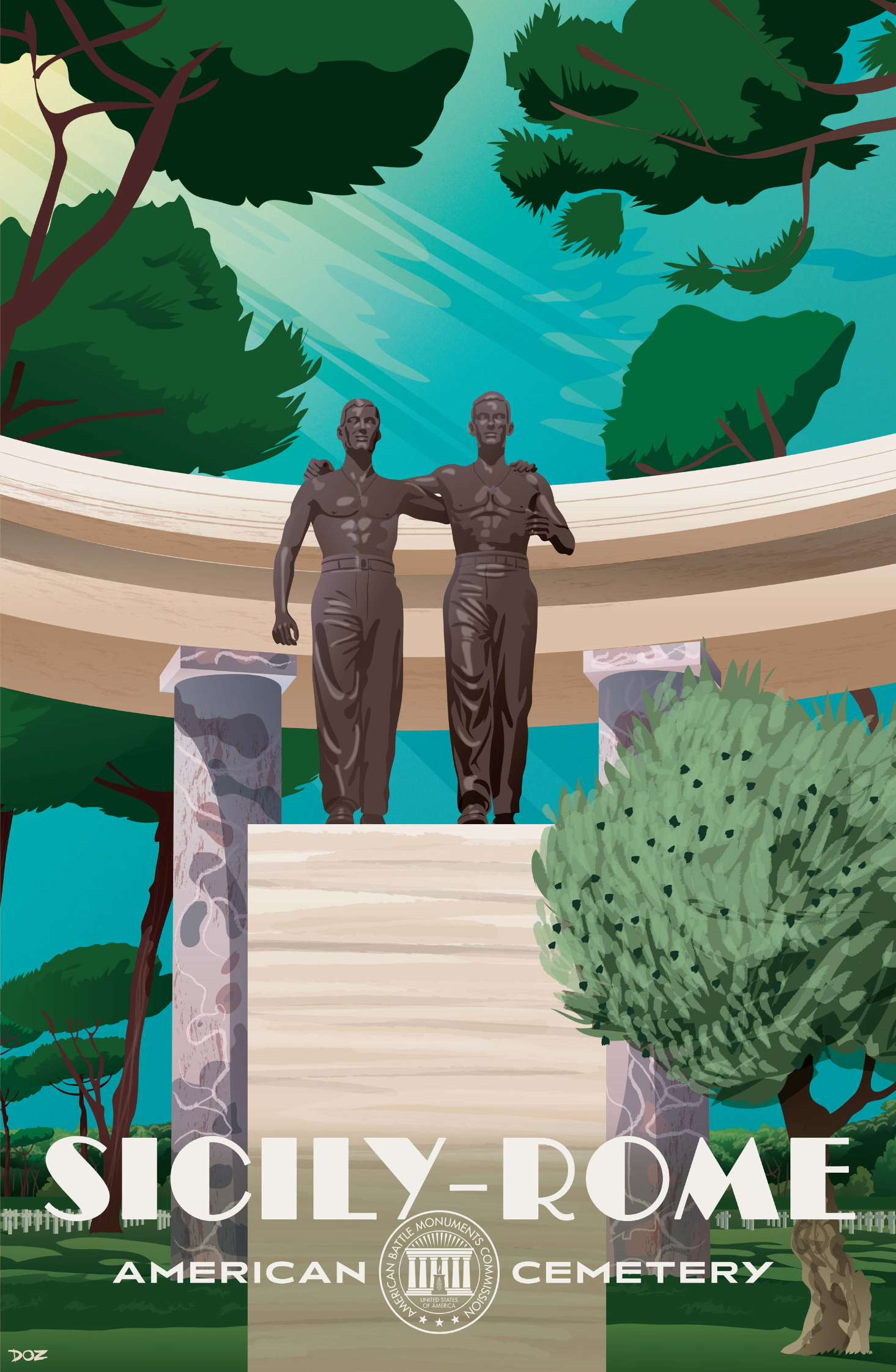
Vintage posters convey the beauty, tranquility, and solemnity of the place as a sign of respect for those who fought so that we can live free today.
San Francisco, United States

Wellington, New Zealand

Cambridge CB23 7PH, United Kingdom

ABMC.gov
official website of the American Battle Monuments Commission and a proud partner of The American Battle Monuments Foundation
Looking for U.S. government information and services? Visit USA.gov
