


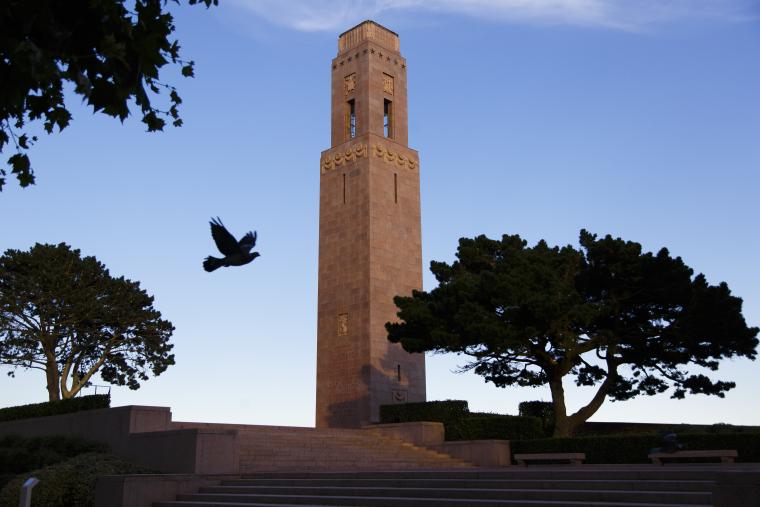
Naval Monument at Brest

Brest, France
Official websites use .gov
A .gov website belongs to an official government organization in the United States.
Secure .gov websites use HTTPS
A lock
or https:// means you've safely connected to the .gov website. Share sensitive information only on official, secure websites.
The 14.3-acre cemetery contains the graves of 1,844 of our military dead. Most lost their lives while serving in American units attached to British armies, or in operations near Cantigny. The headstones, set in regular rows, are separated into four plots by paths that intersect at the flagpole near the top of the slope. The longer axis leads to the chapel at the eastern end of the cemetery.
A massive bronze door surmounted by an American eagle leads into the chapel, whose outer walls contain sculptured pieces of military equipment. Once inside, light from a cross-shaped crystal window above the marble altar bathes the subdued interior with light. The walls bear the names of 333 of the missing. A rosette marks the name of the soldier listed on the Walls of the Missing that has since been recovered and identified.
Initially, some American Expeditionary Forces (AEF) divisions were placed under British and French command, but General John J. Pershing insisted that American troops fight as independent units within Allied operations.
In the Somme sector, American divisions played a key role in major offensives against German positions, particularly in breaking through the Hindenburg Line—Germany’s most fortified defensive position on the Western Front.
The U.S. 1st Division led the first American division-size offensive at Cantigny on May 28, 1918, while elements of the 33rd and 80th Divisions assisted the British in reducing the Amiens salient in July-August. In September 1918, the U.S. 27th and 30th Divisions were placed in front of the Hindenburg Line, engaging in intense fighting near St. Quentin Canal.
By September 29, American forces, alongside British and Australian troops, broke through the Hindenburg Line, setting the stage for final Allied offensives leading to the Armistice on November 11, 1918.
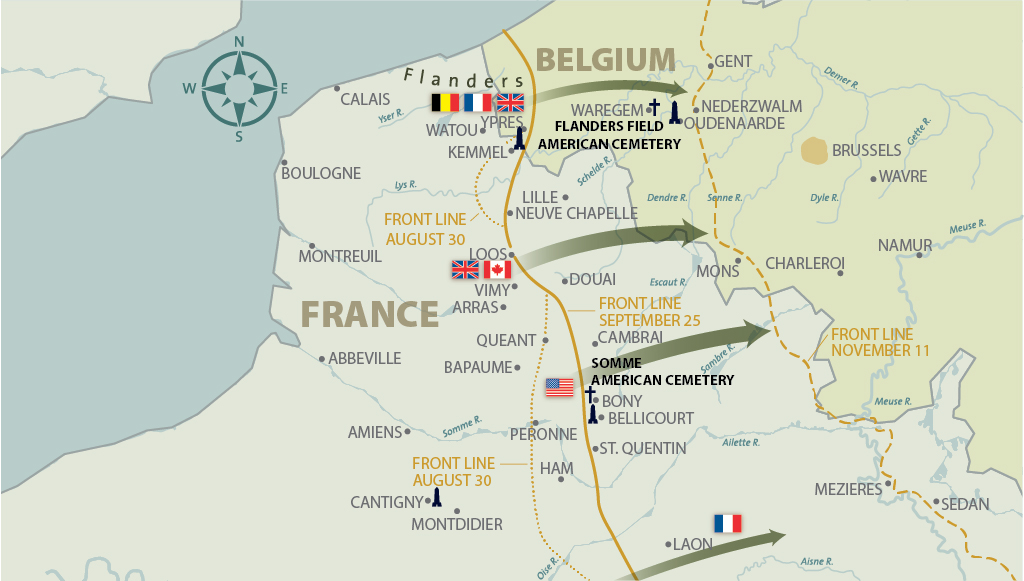
The AEF in the Somme Sector, May 28 – October 24, 1918
Vintage posters convey the beauty, tranquility, and solemnity of the place as a sign of respect for those who fought so that we can live free today.
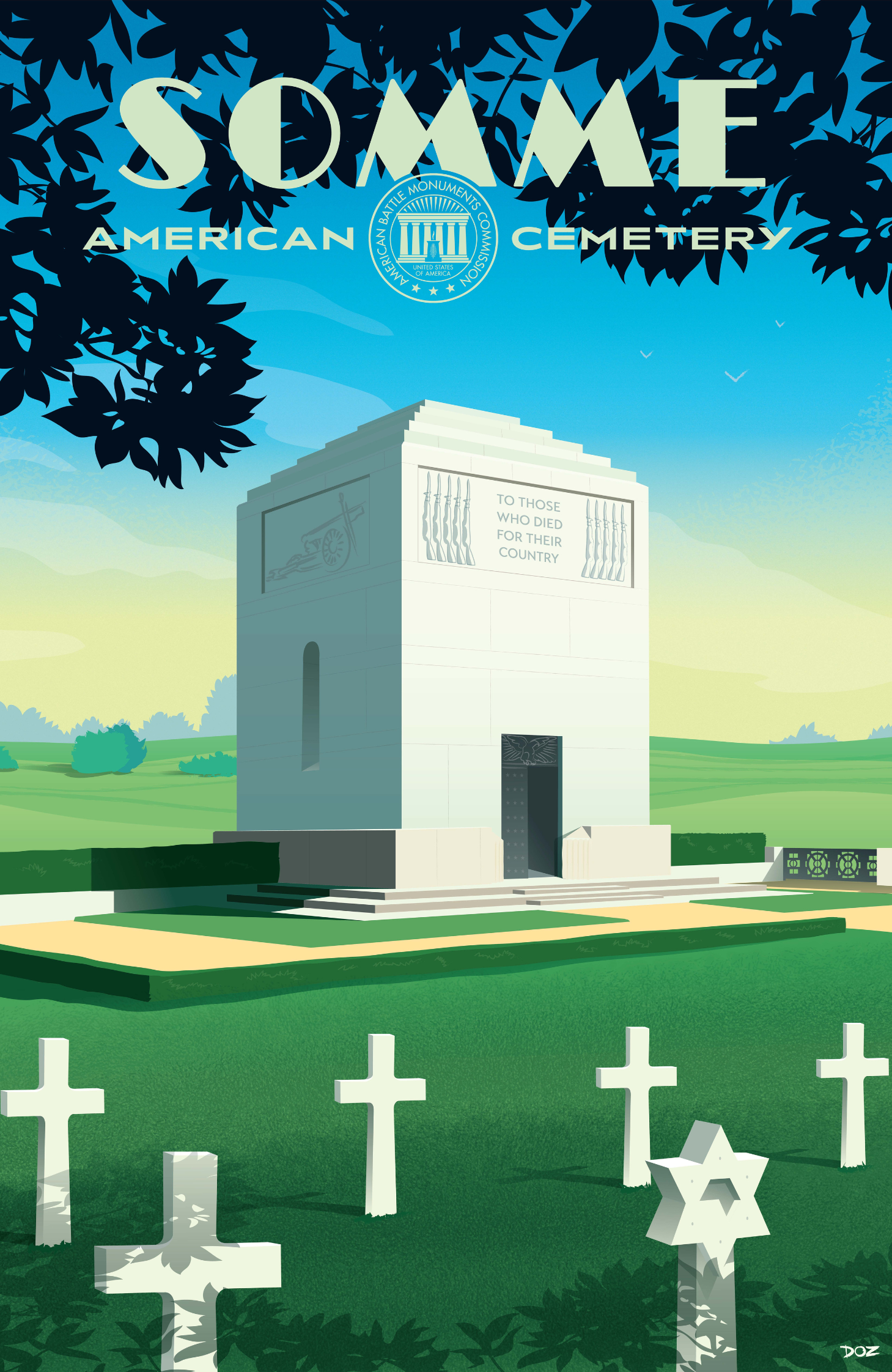
Brest, France

Cantigny, France
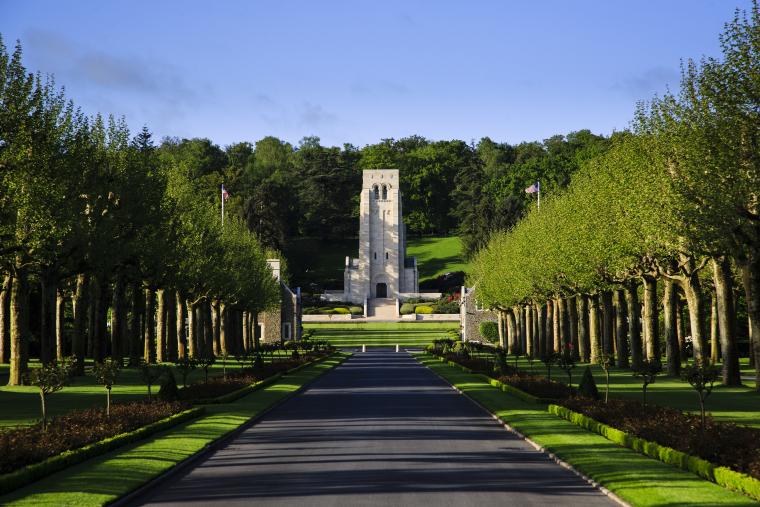
Belleau, France

ABMC.gov
official website of the American Battle Monuments Commission and a proud partner of The American Battle Monuments Foundation
Looking for U.S. government information and services? Visit USA.gov
