


Meuse-Argonne American Cemetery

Romagne-sous-Montfaucon, France
Official websites use .gov
A .gov website belongs to an official government organization in the United States.
Secure .gov websites use HTTPS
A lock
or https:// means you've safely connected to the .gov website. Share sensitive information only on official, secure websites.
The majority of these died in the offensive that resulted in the reduction of the St. Mihiel salient that threatened Paris. The burial area is divided by Linden alignment trees and paths into four equal plots. At the center is a large sundial surmounted by an American eagle. To the west is a statue of a World War I soldier and at the eastern end is a semi-circular overlook dominated by a sculpture representing a victory vase.
Beyond the burial area to the south is the white stone memorial consisting of a small chapel, a peristyle with a large rose-granite funeral urn at its center, and a map building. The chapel contains a beautiful mosaic portraying an angel sheathing his sword. On the walls of the museum are recorded the names of 284 of the missing. Rosettes mark the names of those since recovered and identified. On the wall facing the door is a large map of inlaid marble depicting the St. Mihiel Offensive.
St. Mihiel American Cemetery is situated at the west edge of Thiaucourt, France.
Its elimination was crucial for Allied plans, and the American Expeditionary Forces (AEF) were prepared to lead the attack.
On August 10, 1918, the U.S. First Army was officially activated under General John J. Pershing. It included 14 American divisions and 4 French divisions and was tasked with reducing the St. Mihiel salient. This operation also featured the largest use of airpower in World War I, with nearly 1,500 aircraft participating.
The St. Mihiel Offensive, launched on September 12, 1918, consisted of a main assault on the southern face of the salient, a secondary attack on the western face, and holding attacks near St. Mihiel itself. The offensive was a resounding success, and by September 16, 1918, the U.S. First Army had closed the salient. This victory prepared American forces for the larger Meuse-Argonne Offensive, which began on September 26, 1918.
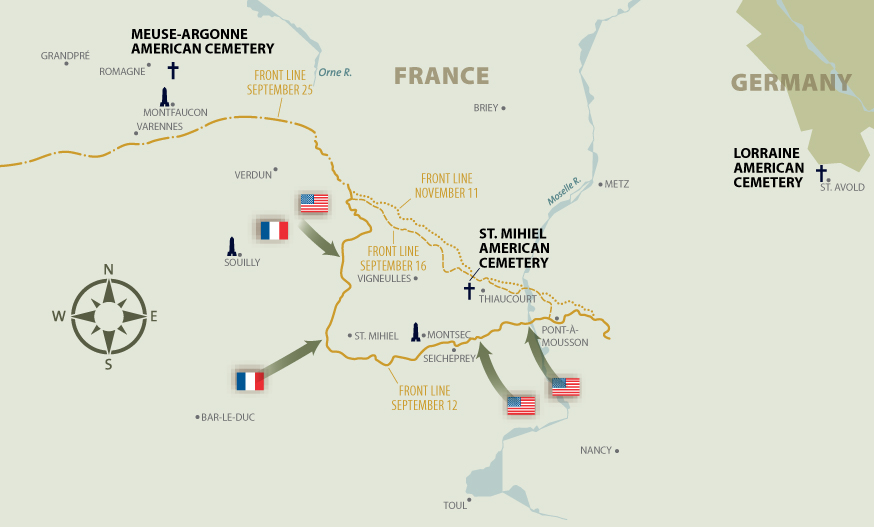
Birth of an American Army
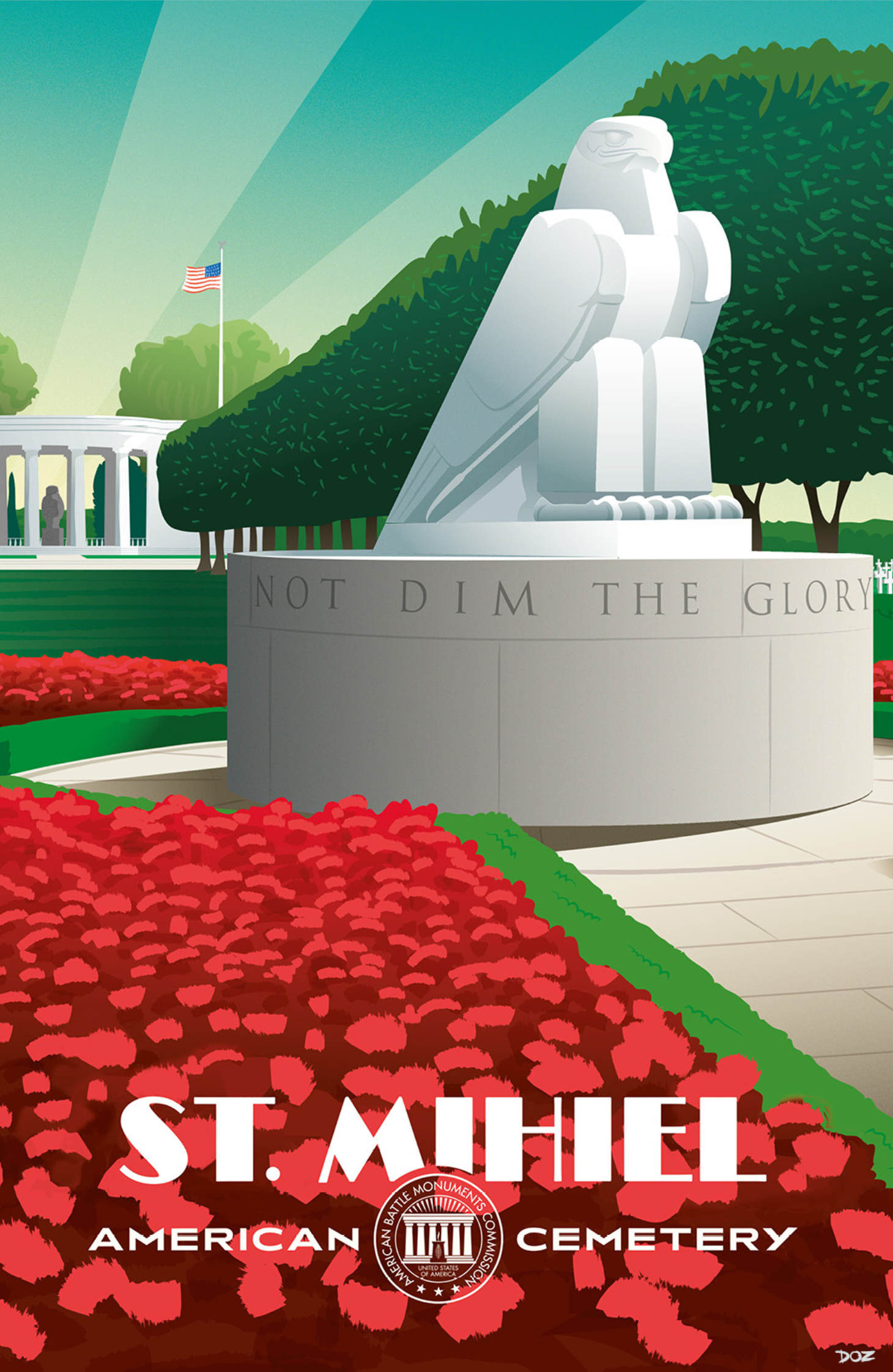
Vintage posters convey the beauty, tranquility, and solemnity of the place as a sign of respect for those who fought so that we can live free today.
Romagne-sous-Montfaucon, France
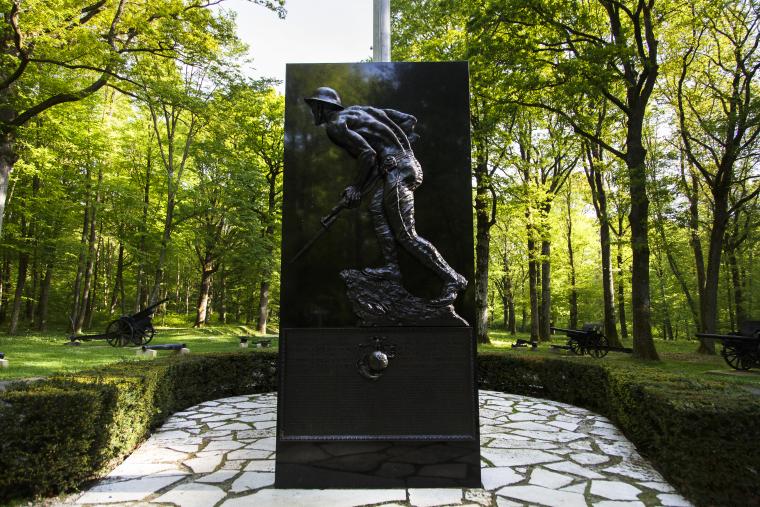
Belleau, France
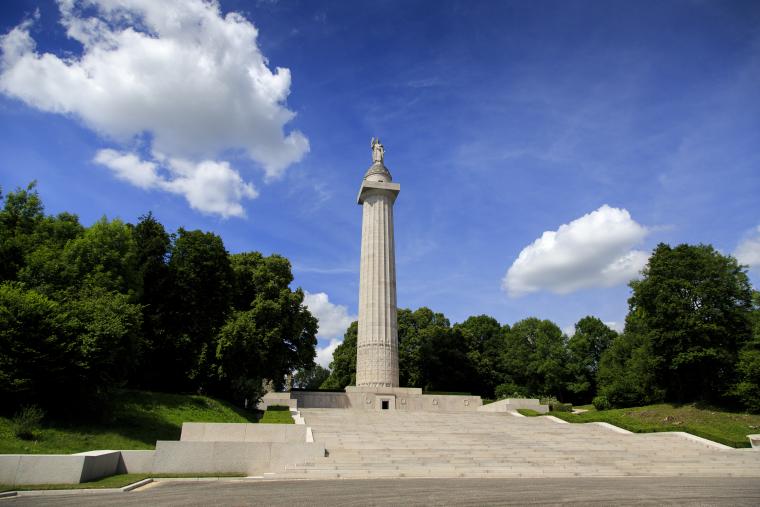
Montfaucon d'Argonne, France

ABMC.gov
official website of the American Battle Monuments Commission and a proud partner of The American Battle Monuments Foundation
Looking for U.S. government information and services? Visit USA.gov
